Crafting Custom Car Coasters: Your Canva & SVG Template Guide
As a designer who constantly juggles client branding projects and my own side hustles, I’ve learned that the most successful physical products often start with a digital foundation that is both flexible and robust. When you are working with a specific dimension like a 3.0" coaster, precision isn't just a luxury; it's a requirement. This is where the utility of high-quality digital assets comes into play. We aren't just talking about a static image here; we are discussing a comprehensive toolkit designed to streamline your workflow from the screen to the printer.
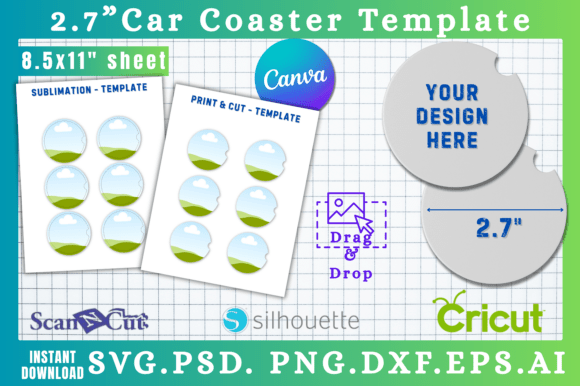
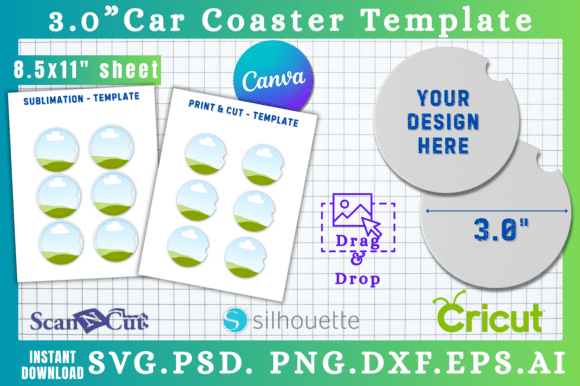
The core appeal of the 3.0" Car Coaster Canva & SVG Templates lies in its versatility. In the world of print-on-demand and small-batch manufacturing, being locked into a single software ecosystem is a nightmare. You might start your concept sketch in a notebook, move to Adobe Illustrator for vector refinement, and then hand off the final mockup to a client in Canva. This template pack respects that modern creative process by providing six distinct file formats—SVG, PSD, PNG, DXF, PDF, and a direct Canva link. It effectively removes the technical barriers that usually slow down the creative phase, allowing you to focus entirely on the aesthetics and branding.
Visual Characteristics and Design Flexibility
Visually, the strength of these templates is their neutrality. Think of them as a "blank canvas" in the truest sense. Because the assets are engineered to fit a standard 8.5"x11" sheet, they offer a clean workspace that doesn't fight for attention. The 3.0" circle is clearly defined, which is crucial for establishing visual hierarchy. When you are designing a coaster, the circular constraint forces you to be deliberate with your layout. You have to consider how text curves, how a logo centers, and how negative space functions within a round boundary. These templates provide that safe zone, ensuring your final print doesn't get awkwardly clipped at the edges.
The "personality" of this asset is purely functional and professional. It isn't a display font or a typeface with its own voice; rather, it is the stage upon which your brand identity will perform. The appeal for a small business owner or entrepreneur is the instant professionalism it provides. You aren't guessing at margins or bleed areas. The structure is already there, ready for you to apply your modern typography choices, whether that’s a bold sans serif font for a minimalist aesthetic or an elegant script font for a boutique feel.
Strategic Applications for Designers and Entrepreneurs
When considering where these templates work best, the applications are surprisingly diverse. Obviously, they are perfect for packaging design—specifically for auto detailers, car clubs, or automotive influencers looking to sell merchandise. However, the utility extends further into marketing and branding.
- Event Marketing: If you are hosting a trade show or a corporate event, custom coasters are a low-cost, high-impact giveaway. Using the SVG files in Cricut Design Space allows you to cut these from cork or cardstock instantly.
- Product Mockups: For graphic designers presenting a branding package to a client, showing a logo on a physical product adds immense value. Use the PSD or Canva versions to create realistic mockups that demonstrate how the brand identity translates to physical goods.
- Personalized Gifts: For the crafter or hobbyist, the ability to edit straight in Canva—even with a free account—democratizes the design process. You can create a one-off anniversary gift or a "just because" present without needing a subscription to professional design software.
The style adaptability is key here. Whether you are aiming for a rustic, handwritten font vibe on absorbent stone or a sleek, corporate look on glossy ceramic, the template maintains the structural integrity of the design. It ensures that the readability of your text remains high, regardless of the material you choose to print on.
Optimizing Your Workflow and Design Choices
To get the most out of the 3.0" Car Coaster Canva & SVG Templates, you need to approach the design phase with a strategy regarding font pairing and color theory. Because the surface area is limited to 3 inches, you have to be ruthless in your editing.
First, regarding font pairing: A common mistake in coaster design is using two competing decorative fonts. Instead, treat the coaster like a small piece of editorial design. Pair a heavy, bold header font (perhaps a geometric sans serif) with a lighter, spaced-out sub-header. This creates a clear focal point. If you are using a creative font that is highly stylized, ensure the supporting text is simple to maintain visual hierarchy.
Second, leverage the specific file formats for their strengths:
- SVG & DXF: Use these if you are physically cutting the coasters. They are vector-based, meaning they scale infinitely without losing quality. This is vital for clean edges on your cutting machine.
- Canva Link: This is your best friend for quick prototyping. It allows you to drag, drop, and experiment with color schemes rapidly. It’s also the easiest way to collaborate with a client who might not have access to Adobe Creative Cloud.
- PSD: For the pros using Photoshop, this allows you to utilize layer styles and effects to see how your design interacts with textures.
Finally, consider the licensing and longevity of your assets. The fact that this is an "instant download" with a "pay once, access forever" model is a significant advantage for content creators managing tight budgets. You are building a library of design assets that you can return to repeatedly. Whether you are a marketer looking for a unique direct mail piece or a blogger creating branded merchandise, the ability to customize these templates ensures that your end product feels cohesive with the rest of your brand identity. By utilizing these templates, you are essentially adopting a premium font strategy for your physical goods—prioritizing clarity, consistency, and professional presentation.